

Pranayama Breathing Techniques
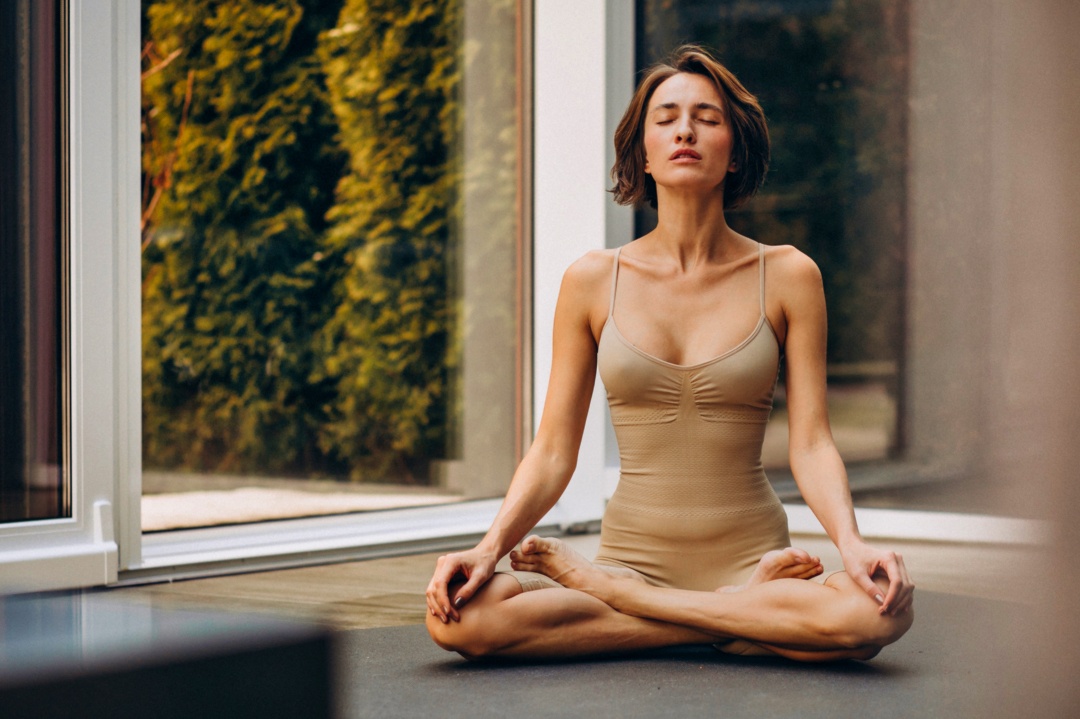
If you’re feeling tired, heavy, dull, or emotionally off-balance, a few minutes of yogic breathing can energize, renew, and sustain you through your day or a challenging yoga class. There are a number of different breathing methods in yoga that can influence and affect your experience in asana, relaxation, and meditation. Having a stronger connection and control of your breath will give you a deeper attunement of your physical, mental, and emotional bodies and help anchor your awareness in the present moment. Yogis believe that if you can master your breath through pranayama practices you can master your mind!
What is Pranayama?
Pranayama is a collection of breathing exercises developed by the ancient yogis for purification, mental focus rejuvenation, and healing. Prana translates into “life force energy,” and Yama translates into “control or mastery of.” Thus, pranayama is a breathing technique used to control, cultivate, and modify the amount, quality, flow, and direction of vital energy in the body. Pranayama is often defined simply as “breath control” and is a primary component in a traditional yoga practice.
Audio: Intro to Pranayama
Use the player below to stream a low-fi instructional audio track for this practice:
[wp_reusable_render id='52763']
Boosting Your Prana
The easiest and fastest way to increase the prana in the body is to change our breathing to affect the quality and quantity of air taken into the lungs. Prana is also absorbed in the nose by its connection to the two nadi energy channels that terminate in the nostrils. Pranayama is used to control, cultivate, and change the prana in the body. A change in the prana will affect the whole body. First energetically, then psychologically mentally, and last physically. advanced pranayama is used to cleanse the impurities and obstructions in the nadis, and eventually unblock the sushumna nadi, allowing the Kundalini prana to flow freely through this channel and upwards through our seven chakras.
The effects of prana on the mind and emotions
When your prana flow or energy channels are blocked or restricted, you may experience a lack of focus and negative emotions like anxiety, fear, worry, tension, depression, anger, and grief. When your prana or energy channels are open and flowing freely and smoothly the mind becomes calm, focused, happy, positive, and enthusiastic. Thus, through the skillful and conscious use of our breathing, we can affect and regulate our emotional states.

Energy Anatomy
The Flow of Prana
The mystical energy of prana flows through our bodies through three main nadis or energy channels. The quality and volume of the flow of prana affects our every action–from our physical movements to our thoughts and feelings.
How to Practice Pranayama
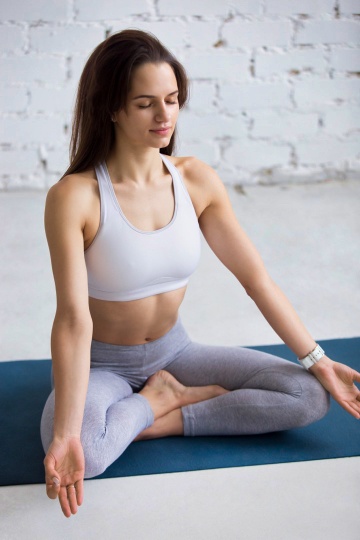 For most pranayama techniques, the breath is slow and steady, breathed in and out of the nose and down into the belly. Always sit with a straight spine and a relaxed body. While you are practicing Pranayama, let go of any thoughts by focusing on the type of breathing involved with the pranayama.
The first thing to master and pranayama is the exhalation, which should be slow and smooth. Once exhaling is mastered, then the inhalation is worked on smoothing it out, making it long and slow. Retention of the breath should not be attempted until you have attained a smooth, gentle inhale and exhale. Let the eyes be soft or closed during your practice. If comfortable, you can gaze upwards at the third eye, the point between the eyebrows.
If you feel dizzy lightheaded winded or gasping for air, stop the pranayama and take slow, relaxed normal breaths until you have recovered. Do not strain your body while practicing pranayama. When you feel fatigued, stop, and rest. After practicing pranayama, lie down to rest in Shavasana or practice a few minutes of meditation.
Types of Pranayama Exercises
Click on the links below to find detailed step-by-step instructions on how to practice each of these types of yoga breathing practices.
- Yogic Breath (Diaphragmatic Breath or Belly Breathing). This is the foundational exercise that all beginners should start with to learn yoga breathing.
- Dirga Pranayama (Three-Part or Complete Breath). This is a foundational pranayama for beginners to strengthen and expand on the practice of diaphragmatic breathing. The Three-Part breath improves breath awareness and lung capacity.
- Ujjayi Pranayama (Victorious Breath or Ocean Sounding Breath). This is the foundational breath for ashtanga and vinyasa styles of yoga. It is both calming and invigorating and improves focus and concentration.
- Sama Vritti Pranayama (Equal Breath). This basic breath focuses on having your inhalations and exhalations the same length. It is balancing and deeply relaxing and good for beginners.
- Nadi Sodhana Pranayama or Anuloma Viloma (Alternate Nostril Breathing). This intermediate practice involves breathing through one nostril at a time. It is a powerful way to bring harmony and balance to the energy pathways.
- Bhramari Pranayama (Buzzing Bee Breath). This beginner-friendly breath uses sound helps to block out distractions and soothe the nervous system.
- Udgeeth Pranayama (Chanting Breath). This practice uses the Om mantra to clear the mind, remove negative thoughts, strengthen the lungs and improve mental focus.
- Kapalabhati Pranayama (Breath of Fire or Skull Shining Breath) – This advanced exercise should only be attempted after mastering the above practices. It strongly boosts energy and is cleansing to the nasal passages and head.
- Bhastrika Pranayama (Bellows Breath). This is a more intense version of the breath of fire and should only be learned from an experienced teacher.
- Sit Cari Pranayama (Hissing Breath). This is a cooling breath that creates a hissing sound as you inhale through your teeth.
- Shitali Pranayama (Cooling Breath). This is a cooling breath that involves inhaling through your curled tongue.
- Chandra Bhedana Pranayama (Moon-Piercing Breath) This is a cooling breath that is similar to Nadi Sodhana.
- Surya Bhedana Pranayama (Sun-Piercing Breath). This is a warming breath that is the opposite of Chandra Bhedana.
- Bahya Pranayama (External Breath Retention). This advanced technique involves holding your breath out while engaging the three bandhas.
When to Practice Pranayama
Different forms of pranayama are more appropriate for the morning, mid-day, and evening. The time of day also depends on how we want our body, mind, and heart to feel after our practice. Early morning around sunrise is the ideal time for practicing pranayama. The second best time is in the evening around sunset. You can practice invigorating breathing methods during the morning or mid-day to boost your energy and focus. Slow and calming pranayamas are best practiced in the evenings. Different schools of yoga incorporate pranayama into their asana practices. You will find breathing practices taught before, during, and after hatha yoga or meditation. It’s best to honor what your tradition dictates.
Pranayama Practice Tips
- Wear loose-fitting or stretchy clothes to feel comfortable and relaxed.
- Find a comfortable seated position. If needed, use props to support you.
- Establish a regular practice every day or several times per week for 15-20 minutes.
- Practice in a well-ventilated room that is neat and clean and free from distractions.
- It is best to practice at the same place and time.
- If the weather is pleasant, you can practice pranayama outdoors.
- Avoid practicing yoga under a fan or next to an air conditioner as it may disturb the prana and be distracting.
- Daily practice should be done on an empty stomach.
- It is recommended to clear your bowels before a vigorous practice.
- Keep your mind focused on the sensation of the breath as you practice.
- If you feel any sensations of pain, tension, or weakness in your body, focus on relaxing that area and directing your breath into it.
- Take your time, slow and steady practice is essential to progress and integrate pranayama’s effects.
Pranayama Breathing Ratios
The slow-paced pranayama techniques can be further modified by changing the ratios of the four different parts of the breath. Breath retention is considered an advanced technique, and the holding of the breath should not cause strain or discomfort. In general, lengthening the inhalation is energizing, and lengthening the exhale is calming.
The four parts of the breath described in pranayama are:
- Inhalation (puraka)
- Internal retention (antara-khumbaka)
- Exhalation (rechaka)
- External retention (bahya-khumbaka)
You can adjust the energetic effect of any slow-paced pranayama technique by changing the ratios of the four different parts of the breath by using the breathing ratios chart below.
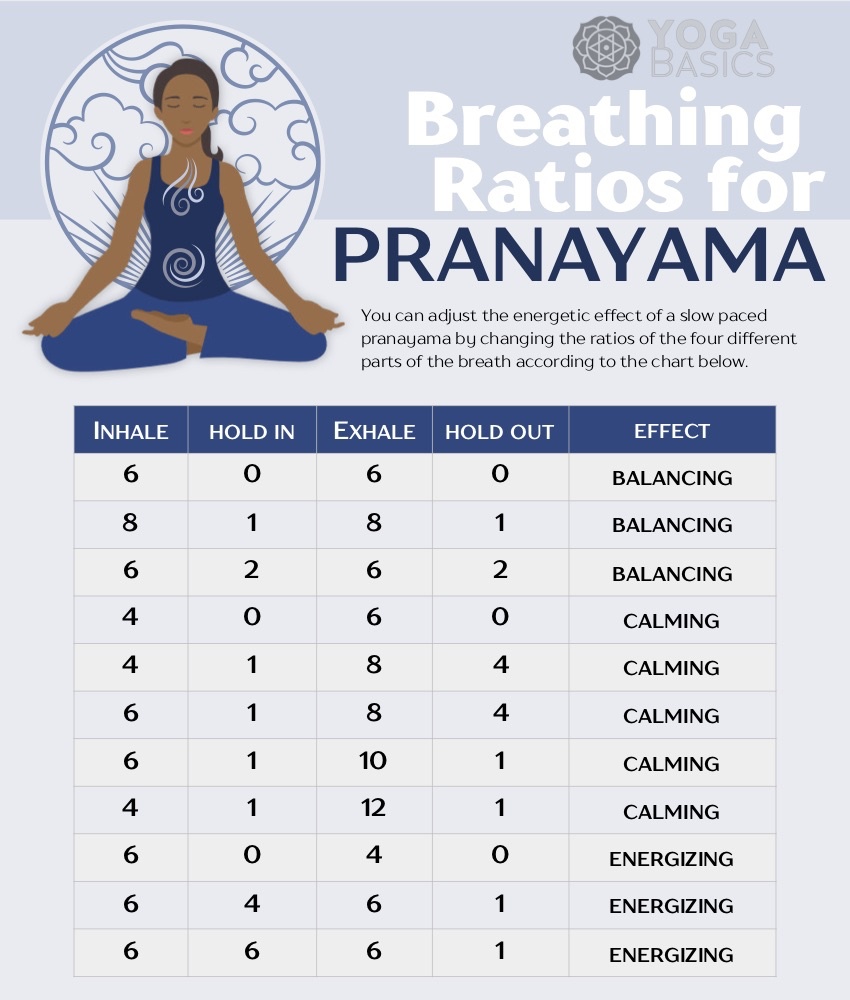 Begin with the breathing ratios with no breath retention. Adjust the speed of your counts based on your lung capacity and comfort level. Experiment with the above ratios and note what works best for you.
Left vs. Right Nostril Breathing in Pranayama
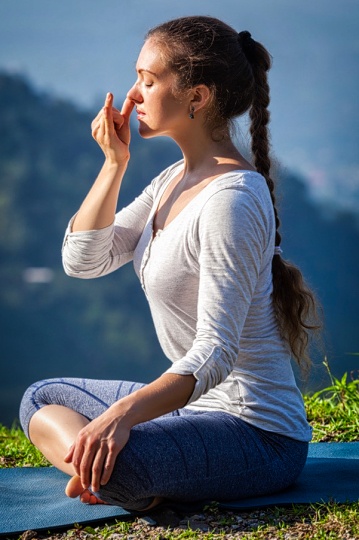
Several advanced pranayama techniques involve blocking off one nostril. Breathing through one or the other nostril dramatically changes the mental and emotional energy of the body. Left nostril breathing has been shown by medical studies to slow down the heart rate and decrease blood pressure. Conversely, right nostril breathing has shown to increase the heart rate and blood pressure. The right nostril connects to the Pingala nadi and has a yang, warming, bright, solar, and active energy. The left nostril connects to the Ida nadi and has a yin, cooling, dark, lunar, and calming energy.

The Practice of Yoga
Benefits of Pranayama
Yoga breathing exercises have many powerful benefits to the body, mind, and heart. Pranayama can reduce stress, anxiety, fatigue, high blood pressure and can improve lung function, focus, sleep, digestion, metabolism, and overall well being.
Cautions For Pranayama
- If you have any breathing or respiratory issues, consult your doctor before doing pranayama.
- If you have asthma or high blood pressure should not hold the breath.
- Avoid Kapalabhati, Bhastrika, and Surya Bhedana pranayama in the summer months or if you have a health condition that is aggravated by heat.
- Avoid Sit Cari, Shitali, and Chandra Bhedana pranayama in the wintertime or if you have a health condition that is aggravated by cold.
- Avoid Breath of Fire and Bhastrika pranayama during pregnancy, hernia, or recent abdominal surgery.
- If you feel dizzy, nauseous, or lightheaded stop practicing and rest.
- It is best to learn pranayama from an experienced yoga teacher who can provide detailed and individual instruction and helpful advice.
Books on Pranayama
There are several books on pranayama that go into much greater detail about the practice. If you are curious about studying and learning more about yogic breathing techniques, we recommend you check out the following books:
- Light on Pranayama by B K S Iyengar
- The Yoga of Breath: A Step-by-Step Guide to Pranayama by Richard Rosen
- The Breathing Book: Good Health and Vitality Through Essential Breath Work by Donna Farhi
- The Power of Breath: The Art of Breathing Well for Harmony, Happiness and Health by Swami Saradananda
- Pranayama beyond the Fundamentals: An In-Depth Guide to Yogic Breathing by Richard Rosen


